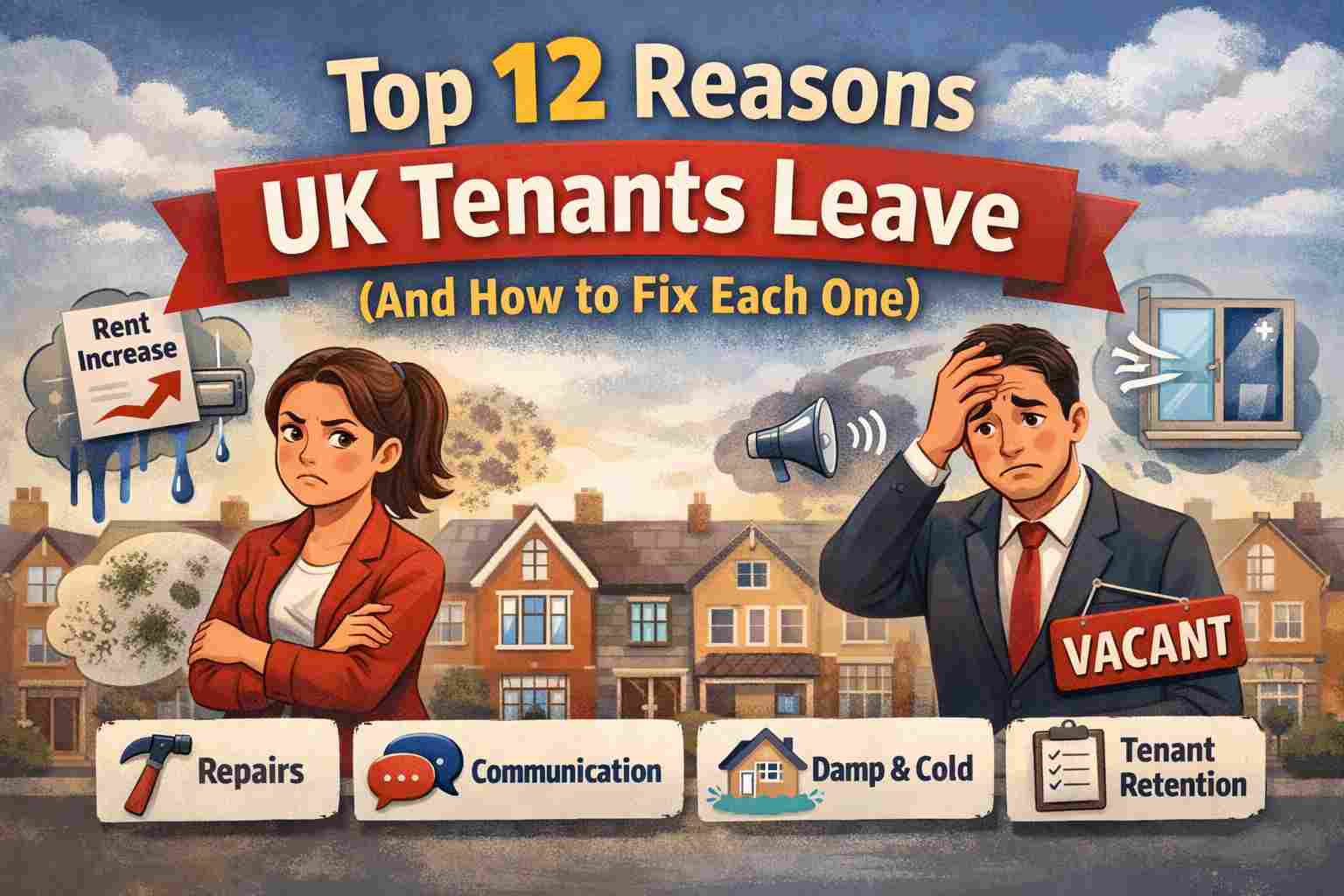
Top 12 Reasons UK Tenants Leave (And How to Fix Each One)
Tenant turnover rarely happens “out of nowhere”. Most tenants leave after the same handful of frustrations build up over time, and landlords miss the warning signs until the notice lands.
This guide breaks down the top reasons UK tenants move out, and gives you a practical fix for each one so you can reduce churn, protect cashflow, and keep good tenants for longer.
Think of it as a retention playbook you can apply immediately, whether you self-manage or use an agent.
Tenant turnover is not just “one month void and a fresh advert”.
It is lost rent, council tax liability, cleaning and repairs, agent fees, time spent arranging viewings, and often a lower quality replacement tenant if you rush.
To achieve fewer void periods, you need to understand why tenants actually leave and fix the cause at the property and management level.
If you want a simple way to quantify the real cost of churn, here’s how to reduce tenant turnover and void costs without guessing.
In short, most UK tenants leave because of rent increases, poor repairs, weak communication, property condition issues, neighbour problems, damp, and feeling unsupported.
Landlords reduce tenant turnover by keeping the property warm and dry, fixing maintenance quickly, communicating clearly, improving cleanliness and safety, and managing renewals early with fair pricing.
The landlord mistake that quietly increases turnover
Most churn is self-inflicted, even in “good” rental markets. The tenant does not leave because one thing went wrong, they leave because nothing gets resolved quickly enough to rebuild confidence.
If you want longer tenancies, the goal is simple: remove the repeated annoyances that make staying feel harder than moving.
Many landlords assume tenants leave because “they found somewhere cheaper” or “they wanted a bigger place”.
Sometimes that is true.
But in most cases, the tenant was already unhappy before the new property appeared.
Tenants usually leave after a build-up of friction: small issues that stay unresolved long enough to make moving feel worth the hassle.
Retention is less about being generous and more about removing avoidable pain points.
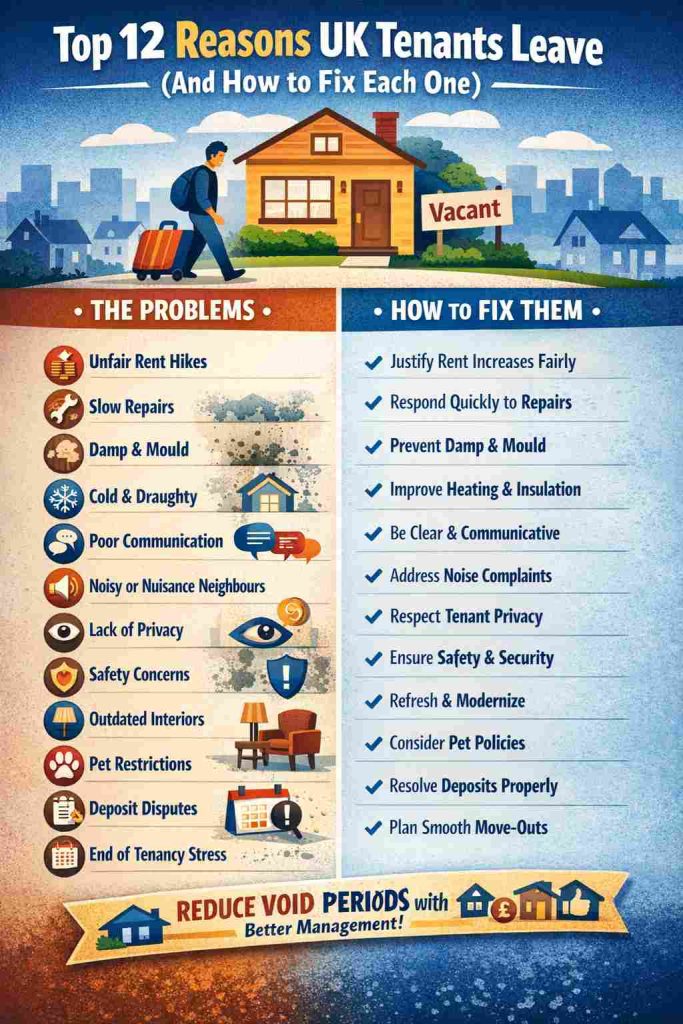
The Top 12 Reasons UK Tenants Leave (And How to Fix Each One)
Most tenant move-outs follow a pattern. It is rarely a surprise event, it is a predictable result of price pressure, unresolved maintenance, and how the tenancy feels day to day.
Use the list below as a practical diagnostic tool. Find the reason that matches your property, apply the fix, and you will reduce voids and keep stronger tenants for longer.
Below are the real reasons tenants move out, and the practical fixes that reduce churn.
1) Rent rises that feel unfair
Rent increases do not just change the monthly cost, they change how the tenant judges value. If the property feels the same (or worse) after the rise, the tenant starts questioning whether staying still makes sense.
How it turns into a move-out:
When a rent rise feels sudden or unjustified, the renewal conversation becomes a comparison exercise and the tenant starts shopping the market.
Rent is the fastest way to trigger a tenant’s “move or stay” calculation. If the increase feels sudden, poorly explained, or above what the property delivers, the tenant stops thinking long-term and starts shopping.
The issue is not always the amount, it is the fairness signal. A well-handled increase can keep a tenant, but a badly handled one turns renewal into an exit plan.
A rent increase is not just a number. It is a signal. If the tenant feels they are paying more but receiving the same (or worse) standard of living, they start browsing Rightmove immediately.
Fix it:
- Raise rent earlier and smaller, not late and aggressive
- Explain the “why” (mortgage rise, insurance, market adjustment) in one sentence
- Offer a simple option: 12-month renewal at £X, or flexible rolling at £Y
- If you are above-market, reduce friction by improving something visible (paint refresh, professional clean, new blinds)
Retention win: A tenant who feels respected negotiates. A tenant who feels squeezed replaces you.
2) Slow repairs and unresolved maintenance
Maintenance is where trust is built or broken. Tenants can tolerate the odd problem, but they struggle with silence, delays, and repeat chasing.
If repairs feel like a battle, the tenant starts to mentally check out. Once that happens, even a good fix later can be “too late” for retention.
Why tenants leave:
Delays make tenants feel ignored. Even minor issues become major resentment when they drag on for weeks.
Strong tenant retention starts before the tenant moves in, because many problems are avoidable if you spot them early. Here’s how to avoid costly maintenance surprises before you commit to a property.
Fix it:
- Acknowledge within 24 hours, even if you cannot fix instantly
- Give a date, not “soon”
- Use a simple rule: anything affecting heat, water, safety, or security is urgent
- Keep a shortlist of reliable trades to avoid “waiting for quotes”
Retention win: Fast response beats perfect workmanship. Tenants want certainty.
3) Damp, mould, and poor ventilation
Damp and mould issues escalate quickly because they feel personal and unsafe. Even when the cause is minor, tenants often fear it will become a long-running battle that affects their health and belongings.
A lot of tenant issues start with what you unknowingly bought, not what the tenant did. Here’s how to avoid buying a problem property by spotting the warning signs early.
Once a tenant thinks the home is “always damp”, they stop seeing it as a place to settle. They see it as a problem to escape.
What’s really happening:
This is one of the fastest trust-breakers. Tenants worry about health, clothing damage, and deposit disputes later.
Fix it:
- Treat damp like a property problem first, not a tenant behaviour problem
- Check extractor fans, trickle vents, window seals, and gutters
- Consider a humidity sensor and a basic extractor upgrade in kitchens/bathrooms
- Document what you’ve done and give clear ventilation guidance without blaming
Retention win: A dry home keeps tenants longer and reduces complaint escalation.
4) The property is cold, expensive to heat, or draughty
Tenants do not just rent a property, they rent the monthly running cost that comes with it. If the home is hard to keep warm, every cold night turns into frustration and every bill reinforces the idea they should move.
Even when rent is competitive, a draughty or inefficient home feels “overpriced”. Comfort and cost are retention drivers landlords often underestimate.
The real trigger:
High bills are a tenant’s monthly pain. If the home costs too much to run, the rent feels higher than it is.
Fix it:
- Improve “felt warmth”: curtains, draught proofing, radiator bleeding, door seals
- Service the boiler and check thermostat controls are simple
- Add loft insulation where possible
- Provide a one-page “how to run the heating efficiently” guide
Retention win: Comfort beats aesthetics. Warmth retains tenants more than new furniture does.
5) Poor communication and unclear expectations
Tenants can handle problems, but they struggle with uncertainty. When messages go unanswered, updates are vague, or expectations are unclear, the tenancy starts to feel stressful instead of stable.
Good communication is not about long explanations. It is about quick replies, clear next steps, and making the tenant feel supported rather than managed.
What the tenant experiences:
Tenants do not leave because of one mistake. They leave because they feel the landlord or agent is hard work.
Fix it:
- Set one channel for reporting issues (email or WhatsApp, not five places)
- Reply quickly even if the solution takes time
- Confirm what will happen next and when
- Use simple templates: “Thanks, booked for Tuesday 10–12, I’ll confirm once completed.”
Retention win: Tenants stay where communication is calm, predictable, and respectful.
6) Cleanliness and condition at move-in was poor
Move-in condition sets the tone for the entire tenancy. If the tenant starts by deep-cleaning, reporting faults, or feeling like they have inherited someone else’s mess, their trust drops immediately.
A poor first impression is hard to recover from. Tenants who feel the property was handed over carelessly are far more likely to treat it as temporary.
Why this becomes a deal-breaker:
First impressions create the relationship. If a tenant starts the tenancy cleaning someone else’s mess, they stop caring.
Fix it:
- Professional clean before check-in, every time
- Replace worn sealant, touch up paint, fix snags
- Replace cheap broken things that “still work” but look bad (toilet seat, loose handles)
- Use a pre-move checklist so standards are consistent
Retention win: A strong move-in experience raises tenant pride and reduces neglect.
7) Noise, neighbours, or anti-social behaviour
Noise and neighbour issues drain tenant satisfaction quietly but consistently. Even if the property itself is fine, the living experience can feel exhausting when sleep, privacy, or peace is disrupted.
Tenants will not usually “put up with it” long-term. If they believe the situation will not improve, they start looking for a calmer home as soon as they can.
Why tenants leave:
You cannot always control neighbours, but tenants blame the property for the experience.
Fix it:
- Be honest at viewing if the area has noise factors
- Improve internal sound reduction where possible (rugs, door closers, sealing gaps)
- Respond seriously to repeated reports and keep records
- If it is a building issue (HMO noise, shared entrances), consider management changes
Retention win: You cannot promise silence, but you can promise action and support.
8) Safety and security concerns
Security is a deal-breaker because it affects how safe a tenant feels every day. Small issues like poor locks, bad lighting, or a loose window latch can create constant anxiety, even if nothing has happened.
When tenants do not feel secure, they rarely renew. They would rather move to an average home that feels safe than stay in a good home that does not.
The problem underneath:
If tenants do not feel safe, they do not renew. Safety includes locks, lighting, and “who has keys”.
Fix it:
- Upgrade locks if needed and keep key control documented
- Install motion lights and good external lighting
- Ensure windows close properly and feel secure
- Address entrance issues quickly in blocks or conversions
Retention win: Safety is emotional. Tenants leave even if the risk is low, if the fear is high.
9) Inspections feel intrusive or excessive
Inspections are normal, but the experience matters. If they feel too frequent, overly critical, or poorly handled, tenants start to feel like they are being watched rather than trusted.
The fastest way to lose a good tenant is to manage them like a risk instead of a customer. Respectful inspections keep cooperation high and reduce churn.
How this turns into a move-out:
Tenants accept inspections. They do not accept feeling monitored.
Fix it:
- Keep inspections predictable: every 3–6 months, not constantly
- Offer time windows and flexibility
- Focus on property condition, not lifestyle judgement
- End inspections with a positive summary: “Looks good, thanks for keeping it tidy.”
Retention win: Respect increases cooperation and renewals.
10) The tenancy renewal process feels stressful
Renewals should feel simple and predictable. When they are late, unclear, or full of last-minute demands, tenants start planning an exit because they do not feel secure in the property.
A smooth renewal process is a retention tool. The earlier and calmer you handle it, the less likely the tenant is to start exploring alternatives.
What this signals to tenants:
If renewal is late, unclear, or full of “surprises”, tenants start planning an exit.
Fix it:
- Start renewal discussions 90 days before the end date
- Confirm: rent, term options, and any planned works
- Avoid “pressure language” like “sign now or it goes back on the market”
- If you want a rent rise, combine it with a longer term and stability
Retention win: Early renewals reduce voids more than better advertising does.
11) Deposit disputes and end-of-tenancy fear
Tenants think about the deposit long before move-out. If they believe deductions will be unfair, they are less likely to invest emotionally in the home and more likely to treat the tenancy as short-term.
Trust matters here. A landlord who is transparent and reasonable creates long stays, while a landlord who feels “difficult” encourages quick exits.
The retention risk:
Tenants talk. If they believe you will “take the deposit anyway”, they treat the home like a short stay.
Fix it:
- Be fair and transparent on what counts as damage vs wear and tear
- Use an inventory that is detailed but not aggressive
- Fix issues during the tenancy rather than storing them for checkout
- Confirm you want the property returned “clean and in the same condition, minus fair wear and tear”
Retention win: Tenants stay where they trust the exit will be reasonable.
Clear deposit rules reduce end-of-tenancy tension and help tenants feel safer staying long-term – here are the official tenancy deposit protection rules.
12) The property no longer fits their life (the “normal” reason)
Not every move-out is a failure. Life changes like new jobs, relationships, children, or buying a home will always create natural turnover, even with good landlords.
The goal is to make these the main reasons tenants leave. When the property is well-run, you remove the avoidable exits and your turnover becomes predictable.
Why tenants leave:
Sometimes it is not your fault. Job changes, relationship changes, children, commuting, or buying a home.
Fix it:
You cannot prevent life changes, but you can reduce preventable exits so these are your main ones.
What you can do:
- Offer small upgrades that extend suitability (storage, shelving, better lighting)
- Be flexible with renewal lengths
- Keep your property well-maintained so it remains a “safe default”
Retention win: The goal is not zero turnover. The goal is predictable turnover.
The tenant retention checklist
If you want fewer void periods, you need a repeatable standard, not guesswork. The checklist below is designed to stop preventable move-outs by tightening the areas that tenants judge most: repairs, warmth, communication, and renewal clarity.
Use it as your minimum operating system for keeping good tenants longer, whether you self-manage or run everything through an agent.
Use this as a quick landlord standard:
- Reply to maintenance messages within 24 hours
- Fix heating, water, leaks, and security issues fast
- Keep the home warm, dry, and draught-free
- Do a professional clean and snag list before move-in
- Start renewals 90 days early
- Communicate clearly: what happens next + when
- Keep inspections respectful and consistent
- Avoid surprise charges and deposit conflict
- Make one visible improvement each renewal cycle (even small)
FAQs
What is the biggest reason tenants leave in the UK?
The most common reason is a mix of rent increases and unresolved maintenance. Tenants tolerate a lot, until they feel ignored or overcharged.
How do landlords reduce tenant turnover?
You reduce tenant turnover by making repairs fast, keeping communication clear, maintaining warmth and condition, and running renewals early with fair pricing.
Is tenant turnover always bad?
Not always. Some turnover is normal due to life changes. The aim is to reduce avoidable exits so turnover becomes predictable, not constant.
Final takeaway
Tenant turnover is rarely “just one of those things”. In most cases, it is the predictable result of small issues being left unresolved for too long.
Fix the root causes early, run your renewals properly, and keep the home warm, dry, and well-managed. Do that consistently, and your void periods drop naturally.
Tenant turnover is rarely random. It is usually the result of friction that builds quietly.
If you fix the 3 biggest drivers (repairs, communication, warmth/condition), you reduce voids and keep good tenants for longer.
If you want, I can also write a matching internal link block for UncommonDeal like:
“Tenant turnover cost calculator” + “Void period cost checklist” + “Landlord retention scorecard” (all structured for your site).

Koye Beckley is a UK property investor and founder of UncommonDeal, with practical experience in buy-to-let, property auctions, refurbishment projects and investment deal analysis. Through UncommonDeal, he publishes property market research, property deal sourcing and compliance guidance, investment guides and data-driven analysis to help investors evaluate buy-to-let, BRRR, flip and auction opportunities.
