Tenant Turnover Checklist: The 30-Day Before They Leave
Most tenants decide to leave weeks before they ever give notice. The signs are usually subtle: slower replies, small complaints, unresolved repairs, or growing sensitivity to rent and costs. By the time notice arrives, the decision is already made.
This 30-day tenant turnover checklist gives UK landlords a practical system to spot early warning signs, reduce avoidable voids, and fix the issues that push good tenants out. It focuses on actions you can take before notice is served, not reactive damage control after they leave.
This checklist builds on the wider causes of tenant turnover in the UK, focusing specifically on what landlords can do in the 30 days before notice is served.
Tenant turnover rarely starts with a notice letter.
It usually starts weeks earlier, with small signals landlords miss or dismiss.
A delayed repair.
A rent query that feels “off”.
A tenant going quiet.
A casual comment about rising costs or moving plans.
By the time notice is served, the decision is already made.
This guide gives you a clear 30-day system to identify risk early, intervene properly, and reduce avoidable tenant churn without rent freezes, panic discounts, or awkward conversations.
It is designed for UK landlords who want predictability, not constant re-letting cycles.
Quick answer for busy landlords
Most tenants decide to leave 30 to 90 days before giving notice.
Landlords who actively check tenant satisfaction, maintenance friction, and affordability signals during this window reduce avoidable turnover and voids.
A structured 30-day checklist allows landlords to intervene early and retain good tenants where the numbers still work.
Why tenant turnover is more expensive than most landlords realise
Most landlords underestimate tenant turnover because the real cost is spread across multiple small losses rather than one obvious hit. Void periods get the attention, but they are rarely the biggest financial drain on their own. The hidden costs accumulate quietly and compound over time.
When turnover becomes frequent, even well-priced buy-to-lets can underperform. This is why experienced landlords track tenant stability as closely as rent, yield, and cashflow, not as an afterthought once a tenant leaves.
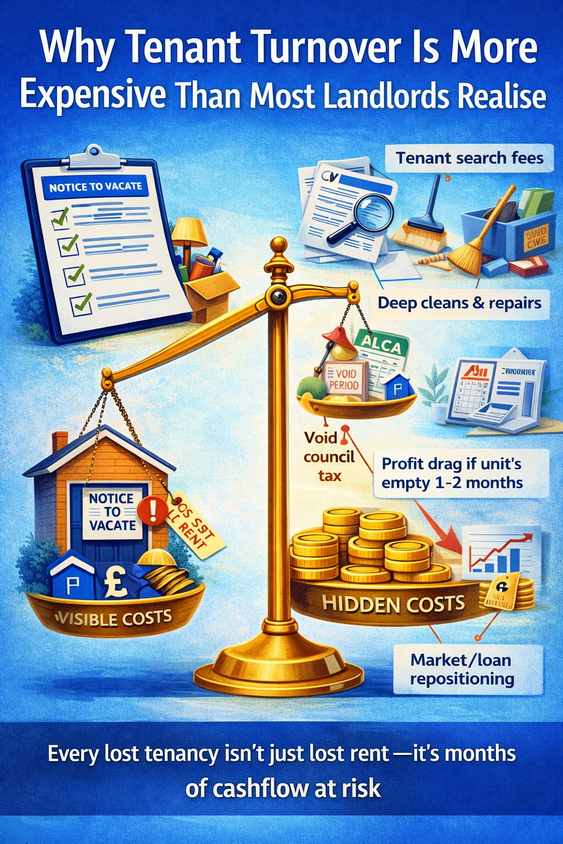
Turnover costs are not just the void period.
They usually include:
- Lost rent during marketing and referencing
- Cleaning, repairs, and cosmetic refresh
- Letting agent fees
- Council tax and utilities during voids
- Risk of accepting a weaker replacement tenant
- Time and stress cost
For many UK buy-to-lets, one unnecessary move wipes out 6 to 12 months of profit.
This is why prevention beats reaction.
The 30-day “before they leave” window explained
Tenant turnover rarely happens overnight. In most cases, tenants make the decision internally weeks before they ever submit formal notice. That gap between dissatisfaction and departure is where landlords still have leverage.
Understanding this 30-day window allows you to intervene early, before frustration hardens into a fixed decision. The aim is not to pressure tenants to stay, but to identify risk signals early enough to respond intelligently and protect cashflow.
Most tenants follow a predictable emotional path before leaving:
- Mild dissatisfaction
- Frustration or disengagement
- Quiet planning
- Notice served
Your goal is not to stop every move.
Your goal is to spot stages 1 and 2 early enough to act.
The checklist below is split into weekly actions, so nothing feels heavy or intrusive.
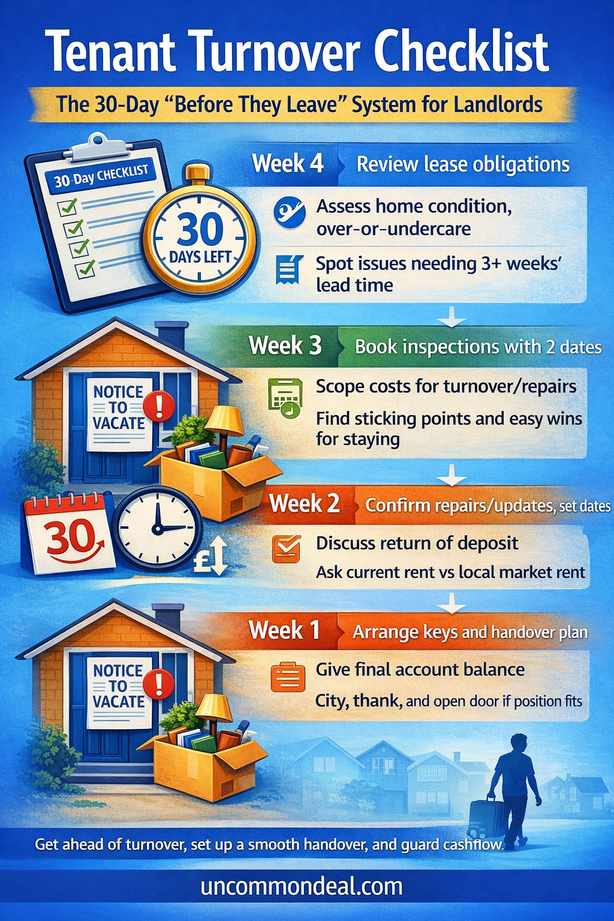
The system below shows how tenant turnover risk develops over 30 days and where landlords still have leverage.
Week 1: Spot early warning signs (Days 1 to 7)
The first week is about observation, not intervention. Most landlords miss early warning signs because they are subtle, easy to rationalise, or dismissed as normal tenant behaviour. This phase is where you separate routine communication from genuine turnover risk.
Acting too early can feel intrusive, but acting too late removes your options entirely. By slowing down and looking for patterns rather than isolated issues, you give yourself a clear, unemotional view of whether a tenancy is drifting toward an exit.
This is the most important phase.
You are not fixing problems yet.
You are diagnosing risk.
Tenant behaviour signals to watch
Tenant behaviour often shifts before formal notice is ever given. These signals are easy to dismiss individually, but when they cluster together, they usually indicate growing dissatisfaction or exit planning.
- Slower response times to messages
- Short or abrupt replies
- Increased complaints about minor issues
- Rent questions framed emotionally, not financially
- Requests for permission to redecorate, sublet, or change use
- Mention of job changes or household shifts
One signal alone means nothing.
Two or more within 30 days means pay attention.
Landlord action checklist
This is a desk-based review, not a tenant-facing conversation. The goal is to build an objective picture of risk using facts and patterns before taking any action.
- Review the last 6 months of communication
- Check maintenance response times objectively
- Review rent vs current market for similar properties
- Look for unresolved “small” issues that never closed properly
Do not contact the tenant yet unless there is a genuine reason.
This week is about clarity, not confrontation.
Week 2: Maintenance and friction audit (Days 8 to 14)
By week two, patterns usually start to emerge. This is where small, unresolved issues reveal whether a tenancy feels well-managed or quietly neglected. Maintenance problems rarely cause tenants to leave on their own, but poor handling almost always accelerates the decision.
Many tenant disputes escalate when expectations are unclear, which is why understanding private renting responsibilities helps landlords reduce friction before it turns into turnover.
A friction audit focuses on how issues were dealt with, not just whether they were “technically fixed”. Delays, repeat problems, and unclear communication create dissatisfaction that builds over time, even when the property itself is sound.
Most tenants do not leave because of one big issue.
They leave because of unresolved friction.
What to audit
This audit is about identifying friction points that quietly erode trust over time. Focus on patterns and handling quality, not just whether issues were logged or marked as complete.
- Open or recently closed maintenance issues
- Repeat issues in the same area
- Delays caused by contractors or access problems
- Communication tone during repairs
Ask yourself one honest question:
If I lived here, would this feel handled properly?
Why this matters for retention: tenants are far more likely to stay when problems feel handled competently, even if they are not resolved instantly.
Fix what is easy first
Early wins matter more than full overhauls at this stage. Fixing visible, easy issues quickly sends a clear signal that the tenancy is being taken seriously.
Prioritise:
- Safety or comfort issues
- Low-cost, high-visibility fixes
- Anything the tenant has mentioned twice
Speed matters more than perfection here.
A fast, competent response resets trust, even if the issue is minor.
Why this matters for retention: fast, visible action rebuilds confidence and reduces the chance that minor frustrations harden into a decision to leave.
Week 3: Affordability and relationship check (Days 15 to 21)
By week three, maintenance friction has either been resolved or exposed deeper tension. This phase focuses on whether the tenancy still works financially and relationally for both sides. Many turnover decisions crystallise here, especially around rent, household changes, or cost sensitivity.
The aim is not to negotiate or justify pricing. It is to understand whether the tenancy remains sustainable and aligned with the property, the rent level, and the tenant’s circumstances.
This is where many landlords panic or overcorrect.
Do not.
You are checking fit, not offering discounts.
How to open the conversation (without pressure)
The goal here is to open a low-friction channel, not to prompt a negotiation or justification. Neutral, service-led language makes it easier for tenants to raise concerns without feeling pressured or defensive.
A simple message works best:
“Hi [Name], just checking in to make sure everything is working okay with the property. Let me know if anything needs attention.”
No surveys.
No rent talk unless they raise it.
No defensive explanations.
Why this matters for retention: tenants are more likely to share problems early when communication feels safe, which gives landlords time to act before notice is served.
What to listen for
These cues are rarely stated directly and often appear indirectly in tone or phrasing. Listening for how tenants describe value, cost, and future plans reveals whether affordability or dissatisfaction is becoming a trigger to leave.
- Hints about cost pressure
- Comparisons to other properties
- Emotional language about value or fairness
- Statements about flexibility or future plans
If rent is raised, this is often where the resistance shows.
Why this matters for retention: early identification of cost or value tension allows landlords to respond strategically before resistance turns into a firm decision to move.
Week 4: Decision point (Days 22 to 30)
By the final week, enough information should be available to make a clear call. This stage is about turning observations into decisions rather than continuing to monitor passively. Delaying action here often leads to rushed responses once notice is served.
The objective is not to retain every tenant at any cost. It is to decide, based on facts, whether retention, adjustment, or preparation for exit best protects long-term cashflow.
By now, one of three things will be clear:
- The tenant is settled and low risk
- The tenant is unhappy but fixable
- The tenant is leaving regardless
Your strategy depends on which bucket applies.
Why this matters for retention: clear, timely decisions prevent reactive concessions and give landlords control over whether a tenancy ends on their terms or the tenant’s.
Run the same 30-day retention checks every month and reduce avoidable voids.
When retention makes sense
Retention should be approached as a numbers-led decision, not a default reaction to potential vacancy. Keeping the right tenant can protect cashflow, reduce re-letting costs, and stabilise performance, but only when the tenancy still aligns with the property and rent level. This section helps you identify when retention is commercially sensible rather than reactive.
Retention is also not a single action. In many cases, small operational improvements deliver better results than financial concessions and preserve long-term yield.
Retention usually makes sense when:
- The tenant pays on time
- The property fits their long-term needs
- The issue is operational, not structural
- The rent still works after modest adjustments
Retention does not always mean reducing rent.
It may mean:
- Fixing lingering issues properly
- Improving communication clarity
- Offering a longer fixed term
- Scheduling proactive maintenance
Why this matters for retention: focusing on fit rather than fear prevents landlords from locking in underperforming rents or problematic tenancies.
When not to fight turnover
Not all turnover is bad turnover. In some cases, trying to retain a tenant creates long-term drag on cashflow, management time, or property condition. Knowing when to step back is just as important as knowing when to intervene.
This section helps you avoid retention decisions driven by fear of voids rather than commercial reality. A controlled exit, planned in advance, often leaves you in a stronger position than forcing a tenancy to continue under strain.
Sometimes letting go is the right call.
Do not chase retention if:
- The tenant is consistently late or difficult
- The property no longer suits their life stage
- The rent gap is structurally unsustainable
- Major works are needed anyway
Forced retention often creates bigger problems later.
A clean exit with preparation is better than a bitter one.
Why this matters for retention: allowing the wrong tenancy to end protects portfolio performance and reduces the risk of compounding future problems.
Turnover prevention checklist (copy and save)
Use this checklist as a recurring review to reduce avoidable tenant turnover before notice is served.
Monthly
- Review tenant communications
- Check open maintenance items
- Compare rent to local market
Quarterly
- Proactive property condition check
- Contractor performance review
- Tenant satisfaction pulse check
Before any rent increase
- Stress test tenant affordability
- Fix visible issues first
- Communicate early and clearly
If you want to run this process consistently, you can download the printable checklist and use it as a monthly review for each property.
How this fits into smarter landlord strategy
Tenant retention is a downstream outcome of the deal you buy, not just how you manage it. Properties that only work on paper often expose their weaknesses through higher churn, friction, and shorter tenancies. Over time, this erodes returns even when headline yields look acceptable.
This is why professional landlords treat tenant stability as a screening metric at purchase stage. If a deal cannot comfortably support long-term tenants under realistic conditions, turnover becomes a structural risk rather than a management failure.
Many retention problems originate from issues that should have been identified during proper legal due diligence checks, not from day-to-day management alone.
Tenant turnover is not just a management issue.
It is a deal-quality issue.
Properties with:
- Poor layouts
- Thin margins
- High service charges
- Maintenance-heavy structures
will always churn faster, regardless of management quality.
This is why experienced landlords assess tenant stability risk before buying, not after problems appear.
Why this matters for retention: buying assets designed for stable occupancy reduces management effort and protects returns across the life of the investment.
This is why experienced landlords stress-test tenant stability before buying, not after turnover starts affecting cashflow.
Final thought
Tenant turnover is often treated as an unavoidable cost of letting, but in reality much of it is preventable. Landlords who operate without a system rely on hindsight, while those with structured checks act early and on their own terms. The difference shows up directly in cashflow stability and long-term returns.
Most landlords lose tenants silently, not suddenly.
A simple 30-day system gives you back control without awkward conversations, guesswork, or reactive discounts.
You will not save every tenancy.
But you will stop losing the good ones for avoidable reasons.
That alone compounds faster than most rent increases.

Koye Beckley is a UK property investor and founder of UncommonDeal, with practical experience in buy-to-let, property auctions, refurbishment projects and investment deal analysis. Through UncommonDeal, he publishes property market research, property deal sourcing and compliance guidance, investment guides and data-driven analysis to help investors evaluate buy-to-let, BRRR, flip and auction opportunities.
